Origin: This variety came from a chance seedling found near Brussels in 1805 by M. Meuris, head gardener for Dr Van Mons. Being unnamed and of fine quality, Van Mons dedicated it to his German friend, Diel, one of the most distinguished German pomologists. • Van Mons sent scions of the variety to the London Horticultural Society in 1817.
Tree: The tree is medium in size and vigorous, spreading, open-topped, slow-growing, hardy, productive
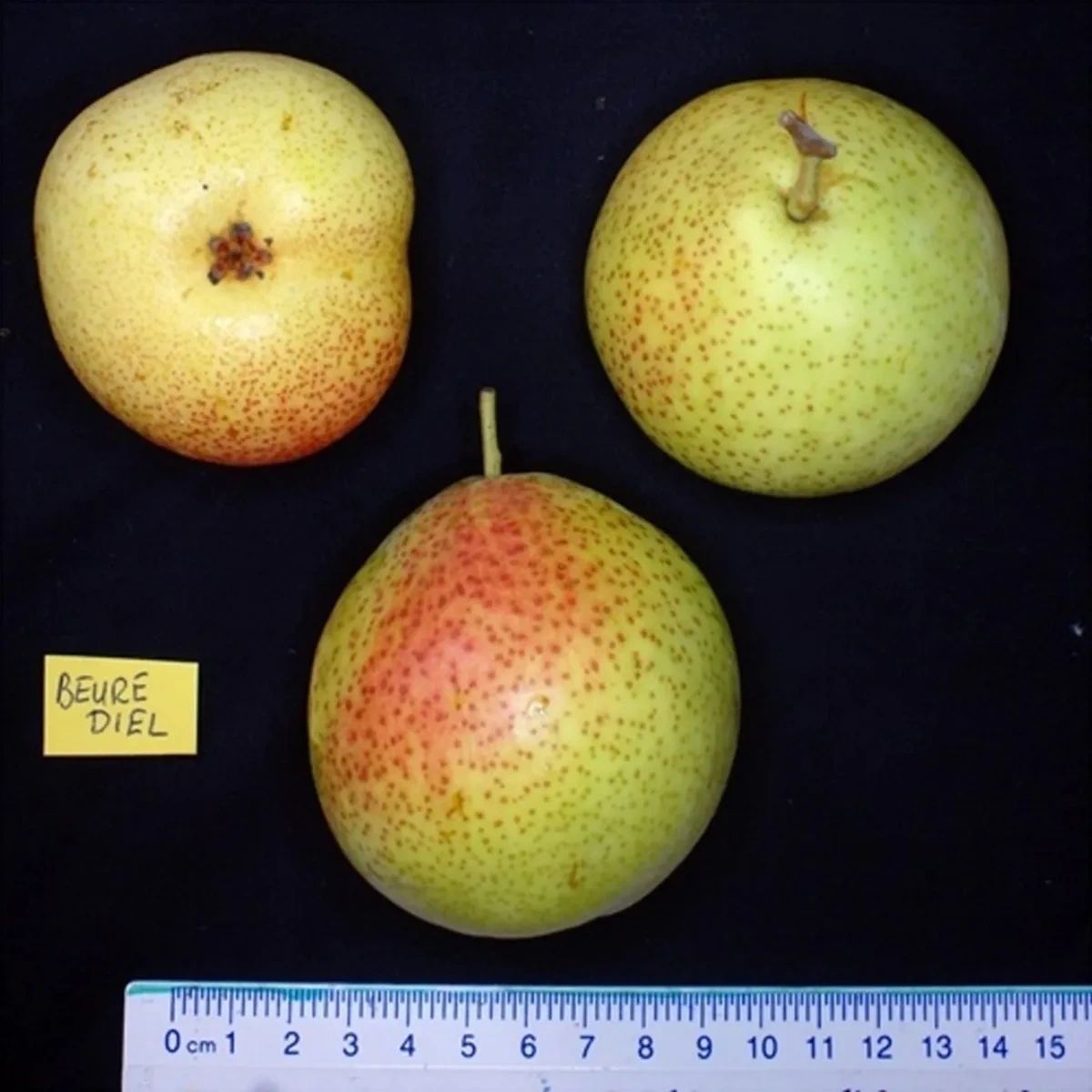
Fruit: Uniform in size, obovate-obtuse-pyriform, often irregular and usually with sides unequal
Skin: Very thick and granular, color lemon-yellow, with a faint pinkish-red blush and markings and flecks of russet; dots many, russet, very conspicuous.
Flesh: Yellowish-white, firm, becoming tender and melting, quite granular around the core, very juicy, sweet, aromatic and rich; quality very good