Description
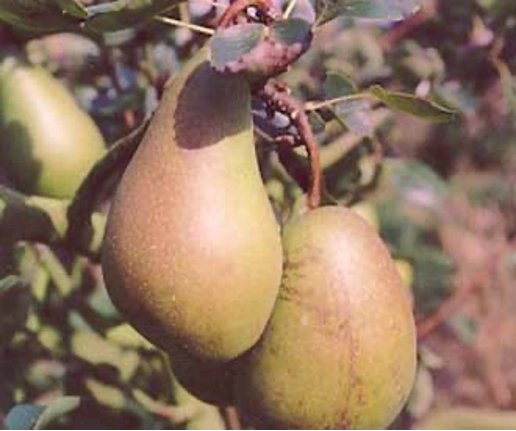
• Vicar of Winkfield Description: Tree large, vigorous, upright-spreading, dense-topped, hardy, very productive, long-lived; trunk and branches stocky
• Skin of fruit is pale yellow, often with a faint trace of a brownish-red blush over the exposed cheek, marked with light russet around the calyx, and occasionally with russet flecks scattered over the surface; dots numerous, small, conspicuous, brownish-russet
• Taste: Flesh is white, granular only near the centre, tender and melting, juicy, somewhat astringent or with a sprightly muski-ness, with no pleasant aroma; quality inferior for dessert but good for cooking
• Uses: Cooking Background: In 1760, this pear was found as a wilding by a French curate at Villiers-en-Brenne
• In due course it was introduced into England by the Rev
• W
• L
• Rahm, Vicar of Winkfield, in Berkshire, and from this circumstance it lost its proper name, Cure or Le Cure, and wrongly acquired that by which it is now known here and in England